Class 12 Food Nutrition and Dietetics Compartment Exam 2025
SECTION A
(Objective Type Questions) (30 marks)
1. Answer any 4 out of the given 6 questions on Employability Skills. 4×1=4
(i) Write two importances of communication.
Ans:
- Build relations
- Career advancement
- Enhance communication
- Satisfaction
(ii) Define the term ‘self-awareness’.
Ans: Self-awareness is about understanding one’s own needs, desires, habits, traits, behaviours, and feelings.
(iii) ___________ is a rectangle shaped box, where the row and column meet in a spreadsheet.
Ans: Cell
(iv) A person who works for an individual or organisation and gets paid for the same is called ___________.
Ans: A wage employed
(v) Write the full form of EESL.
Ans: Energy Efficiency Services Limited (EESL)
(vi) How does one save a spreadsheet?
Ans: Click filer Save Save as File name Click Save
2. Answer any 5 out of the given 7 questions. 5́x1=5
(i) What is enteral feeding?
Ans: When oral feeding is not possible, a liquid formula diet is delivered via a nasogastric feeding tube.
(ii) What type of food should be avoided in diarrhea?
Ans: High-fiber foods (raw fruits and vegetables) should be avoided in diarrhea, and one should prefer strained juices and food-based solutions like rice or dal water and lassi (Butter milk) with salt.
(iii) Write two precautions to be taken to prevent typhoid.
Ans: Typhoid fever spreads through contaminated food and water or through direct contact with someone
who is infected. The mode of spread is faucal oral route. So to prevent typhoid, one should follow :
- Proper personal hygiene practices
- Proper food hygiene practices while cooking or handling food.
(iv) Give two examples of a bland diet.
Ans: Examples of a bland diet are: Cooked / Boiled fruits and vegetables without peel or seeds.
- Clear soups
(v) Write the full form of HACCP.
Ans: HACCP – Hazard Analysis Critical Control Point
(vi) Why does weight loss occur among those suffering from tuberculosis?
Ans: Weight loss occurs in TB :
- Reduced food intake due to loss of appetite
- Loss of protein and other nutritional reserves due to fever
- Malabsorption due to diarrhea.
(vii) What do you understand by the term ‘food hygiene’?
Ans: Food hygiene refers to the conditions and measures that are necessary to ensure the safety of
food from production to consumption.
3. Answer any 6 out of the given 7 questions. 6 x1=6
State whether the following statements and true or false. In case a statement is false, write the corrected statement.
(i) Oven is required in roasting method of cooking.
Ans: False, an Oven is required in baking
(ii) Obesity is a result of excessive energy intake and reduced physical activity.
Ans: True
(iii) Cholera is a viral infection caused by Vibrio cholerae.
Ans: False, Cholera is a bacterial infection caused by the bacterium Vibrio cholerae.
(iv) Type II diabetes is also called juvenile diabetes.
Ans: False, Type 1 diabetes is also called juvenile diabetes.
(v) Food Hazards can be physical, chemical or biological.
Ans: True
(vi) Sphygmomanometer is used to measure blood glucose levels during fasting.
Ans: False, Sphygmomanometer is used to measure blood pressure.
(vii) GMP is an ecological approach to pest suppression.
Ans: False IPM (Integrated Pest Management) is an ecological approach to pest suppression.
4. Answer any 5 out of the given 6 questions. 5×1=5
(i) Who is a dietitian?
Ans: A Dietitian is an expert in dietetics, dealing with human nutritional care. A dietitian applies the
science and principles of human nutrition to help people understand the relationship between food and
health.
(ii) “Pressure cooking is considered one of the best methods of cooking, but it is not suitable in all conditions.” Write two disadvantages of pressure cooking.
Ans:
- Long hours of pressure cooking make food soggy and too soft.
- Flavors of food may blend, and individuality is lost.
(iii) Why is exercise important for an overweight person?
Ans: Maintaining ideal body weight is vital for good health. Excessive body weight increases the risk of
chronic diseases. Exercise or physical activity for 60 minutes every day is recommended to prevent obesity. Exercise, along with a healthy diet, helps maintain a desirable body weight and prevents obesity.
(iv) Give one example each of saturated and unsaturated fat.
Ans:
- Saturated fat – Ghee, butter, and animal fat (like whole milk, red meat)
- Unsaturated fat – Healthy oils such as soybean oil, mustard oil
(v) What is ORS?
Ans: ORS is an Oral Rehydration Salt mixture or solution. It helps to rehydrate individuals suffering from
diarrhea. ORS solution contains 75 mmol/l of sodium and 75 m mol/l of Glucose, Osmolarity 245 m or mol. It is recommended for all ages and all types of diarrhea.
(vi) List two characteristics of patients suffering from Bulimia Nervosa.
Ans:
- Eating a large amount of food in a short time, along with a sense of loss of control.
- Frequent Fluctuation in weight.
- Purging after meals.
5. Answer any 5 out of the given 6 questions. 5 x1=5
The following questions consist of two statements, Assertion (A) and Reason (R). Answer these questions by selecting the appropriate option given below:
(A) Both (A) and (R) are true, and (R) is the correct explanation of (A).
(B) Both (A) and (R) are true, but Reason (R) is not the correct explanation of (A).
(C) (A) is true, but (R) is false.
(D) (A) is false, but (R) is true.
(i) Assertion (A): Diet therapy may include following specialized dietary regimes or meal plans.
Reason (R): These specialized diet regimes are called therapeutic diets, e.g., Gluten-free diet, low-fat diet.
Ans: (a) Both A and R are true, and R is the correct explanation of A.
(ii) Assertion (A): Tuberculosis mainly affects the lungs, but spreads to other organs also.
Reason (R): It is a chronic fever which is caused by Mycobacterium Avium bacteria.
Ans: (b) Both A and R are true, and R is not the correct explanation of A.
(iii) Assertion (A): Overweight and obesity are generally the result of an imbalance between energy intake and energy expenditure.
Reason (R): The imbalance might be due to excess food intake and reduced physical activity.
Ans: (c) A is true, but R is false
(iv) Assertion (A): HbA1c shows the general trend of Glucose levels in the blood during the previous 2 – 3 months.
Reason (R): In a diabetic person, the HbA1c concentration varies from 5 – 6%.
Ans: (d) A is false, but R is true.
(v) Assertion (A): Salmonellosis is a bacterial disease that affects the intestinal tract.
Reason (R): Salmonella bacteria is commonly found in raw eggs, meat, fruits, and vegetables.
Ans: (b) Both A and R are true, and R is not the correct explanation of A.
(vi) Assertion (A): Food Sanitation is not an essential aspect of food preparation.
Reason (R): It constitutes a basic necessity of good manufacturing/agricultural practices.
Ans: (d) A is false, but R is true.
6. Answer any 5 out of the given 6 questions. 5 x1=5
(i) Purine-restricted diet is prescribed for which of the following diseases?
(A) Diabetes
(B) Gout
(C) Jaundice
(D) Hypertension
(ii) If the patient is unable to swallow or chew the food, ____________ is the suitable mode of feeding for such patients.
(A) Oral feeding
(B) Parenteral feeding
(C) Intravenous feeding
(D) Enteral feeding
(iii) When blood glucose level increases above 180 mg/dL, that condition is called:
(A) Glycosuria
(B) Polyuria
(C) Polydipsia
(D) Ketonemia
(iv) _________ drains out excessive potassium and phosphorous from the vegetables.
(A) Blanching
(B) Poaching
(C) Leaching
(D) Roasting
(v) The food safety management system that helps to identify/determine hazards present in the food is:
(A) UNEP
(B) HACCP
(C) ICMR
(D) FSSAI
(vi) Bacteria often present in raw eggs and meat is:
(A) Staphylococcus
(B) Vibrio Cholerae
(C) Salmonella
(D) Clostridium
SECTION B
(Subjective Type Questions) (30 marks)
Answer any 3 out of the given 5 questions on Employability Skills. Answer each question in 20 – 30 words. 3x́2=6
7. Write the factors that affect active listening.
Ans: Factors that affect active listening are :
- Eye contact
- Gestures
- Avoiding distractions
- Giving feedback
8. What is FFM?
Ans: FFM is the Five Factor Model: It includes five parameters that describe an individual’s personality.
Five Factors are :
- Openness
- Consciousness
- Extraversion
- Agreeableness
- Neuroticism
9. How can a spreadsheet be printed?
Ans:
- Click file 2
- Select print
- Press ctrl+P
- Click OK
10. How are organisational skills important for an entrepreneur?
Ans: Organisational helps in making optimal use of one’s time, energy and resources to achieve one’s goal. Becoming better at these organisational skills would help an entrepreneur become successful. Organisational skills include: Time management, Goal setting, Efficiency & Managing quality.
11. Define the term ‘Ecosystem’.
Ans: An ecosystem is the community of living and non-living beings existing together and interacting with and supporting each other. It is the perfect balance where every species can survive
Answer any 3 out of the given 5 questions in 20 – 30 words each. 3x́2=6
12. Enlist two ways through which a diet can be modified or adjusted to meet the therapeutic needs of a patient.
Ans: A diet can be modified and adjusted in the following ways :
- Change is consistency
- Increase or decrease in the energy value of the diet.
- Increase or decrease in specific nutrients or types of food consumed.
- Change in the frequency of meals.
13. What is diarrhea? Briefly explain the different types of diarrhea.
Ans: Diarrhea is the passage of three or more liquid or watery stools in a day. Diarrhea is characterized by the frequent passage of watery stools, which is accompanied by excessive loss of fluids and electrolytes. It is a symptom and not a disease. Types of diarrhea are :
- Acute watery diarrhea (<14 days)
- Persistent diarrhea (>14 days)
- Dysentery (stool with blood or mucus)
14. “Child obesity is on the increase.” Give two reasons.
Ans: Obesity is the result of an imbalance between energy intake (food) and energy expenditure (physical activity). Child obesity is on the increase nowadays because the traditional micronutrient-rich foods consumed by children are replaced by heavily marketed sugar-sweetened beverages (i.e., soft drinks) and energy-dense fatty foods. Salty and sugary foods (HFSS Snacks), contribute to obesity. Insufficient physical activity is one of the important risk factors of obesity. Leisure time dominated by television viewing and other physically inactive pastimes has increased among children.
15. Give two examples of HFSS foods. Briefly explain how HFSS foods are the main culprits for causing hypertension.
Ans: HFSS foods include chips, fried foods, sugar-sweetened carbonated drinks, pizza, burgers, etc.
Unhealthy diets consisting of high-fat, salt, and sugar (HFSS) foods are the main culprit for causing hypertension, as excessive salt intake can cause the body to retain fluid and also cause arteries/blood vessels to constrict, which increases blood pressure.
16. Differentiate between Type I and Type II Diabetes mellitus.
Ans:
- Type I diabetes results from the pancreas’s failure to produce insulin. It is referred to as ‘Insulin-Dependent Diabetes Mellitus’ (IDDM). It is also called juvenile diabetes as it develops in children and adolescents. Type I diabetes is an autoimmune disease. In this type, individuals require a daily dose of insulin injections to control the level of glucose in the blood.
- Type II diabetes is the common form of diabetes. It begins with insulin resistance. It is non-insulin-dependent diabetes and also called adult-onset diabetes, because this type is common among adults. It is associated with excessive body weight of fat (obesity) or a sedentary lifestyle.
Answer any 2 out of the given 3 questions in 30 – 50 words each. 2 x3=6
17. Define malnutrition. Discuss the synergistic effect of malnutrition and infection.
Ans: Malnutrition is an impairment of health resulting from a deficiency or lack of food/nutrients or an imbalance of nutrients in the diet.
The synergistic effect of malnutrition and infection often leads to a high rate of child deaths in poor communities in India. Inadequate dietary intake of the mother during pregnancy results in low birth weight babies. Subsequently, the child is exclusively breastfed for long periods (2 or more years), and complementary feeding is delayed beyond 6 months of age. This triggers growth retardation and weight loss, or, ultimately, malnutrition occurs. Moreover, if the child is further exposed to a poor environment, a lack of hygiene which cause infections like diarrhea or respiratory tract infections. The cumulative effect of dietary deficit and infection produces retardation of physical growth, leading to stunting or wasting.
18. Draw a flowchart to show the different types of fever along with an example of each type. Also, explain how BMR is affected during fever.
Ans:
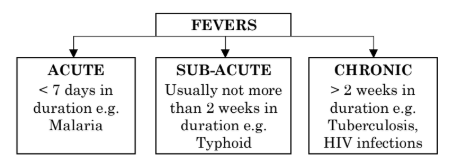
Basal Metabolic rate is described as the rate at which the body uses energy when we are resting to keep the vital body functions going. There is an increase in the basal metabolic rate (BMR) during fever. There is a 13% increase in BMR with every 1C rise in body temperature.
19. Expand the term ORT. Explain how ORT is an effective way for the management of dehydration.
Ans: ORT is Oral Rehydration Therapy. It is a simple treatment for dehydration that is associated with Diarrhea. ORT includes :
- Complete Oral Rehydration Salts Solution
- Solutions made from sugar or salt.
- Food-based solutions.
- Home fluids without insisting on specified amounts of glucose and salt.
ORT is the most essential and effective way for the management of diarrhea. The use of ORT and fluid therapy helps in the management of dehydration as it successfully rehydrates the individual suffering from diarrhea.
Answer any 3 out of the given 5 questions in 50 – 80 words each. 3 x4=12
20. Enumerate the dry heat methods of cooking. Explain any two dry heat methods with their advantages and disadvantages.
Ans: Dry heat methods used for cooking are :
- Roasting
- Baking
- Grilling
- Frying
- Toasting
In dry heat methods, water is not used while cooking the food.
- (a) Toasting :
- It is used generally for bread slices, which are browned from both sides by keeping them between two grills.
- Advantages: Improve the colour, flavor, and texture of food.
- Toasted seeds are easy to grind.
- Toasting reduces the amount of moisture in foods.
- Disadvantages: Continuous attention is required to prevent burning.
- Amino acids are lost while toasting.
- Advantages: Improve the colour, flavor, and texture of food.
- It is used generally for bread slices, which are browned from both sides by keeping them between two grills.
- (b) Baking :
- The medium of cooking is hot air. A dry method of cooking cooking it combines steam that is generated while the food is cooked. Cakes, biscuits, bread, and pizzas are all baked foods.
- Advantages: Texture and flavour of food are improved.
- Baking gives rise to a variety of combinations of dishes.
- Food items are cooked uniformly in an oven.
- Disadvantages: An oven is required for baking.
- Overcooking results in the burning scorching of food.
- Advantages: Texture and flavour of food are improved.
- The medium of cooking is hot air. A dry method of cooking cooking it combines steam that is generated while the food is cooked. Cakes, biscuits, bread, and pizzas are all baked foods.
21. What do you understand by the term obesity? Write two methods implemented for the assessment of obesity. Outline the measures to prevent obesity among adults.
Ans: According to the WHO, obesity is the condition of abnormal or excessive fat accumulation that presents a health risk. Obesity is a BMI greater than or equal to 30.
Two methods for assessing obesity are :
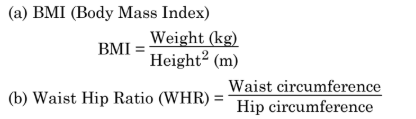
A WHR of more than 0.9 among men and 0.85 in women is associated with an increased risk of several chronic diseases.
Measures to prevent obesity in adults :
- Develop healthy eating practices that include eating five to six servings of vegetables and fruits daily.
- Choose whole-grain foods and avoid refined foods and saturated fat.
- Avoid energy-dense food and sugar-sweetened beverages.
- Preventive strategies for adults also include the promotion of small changes in physical activity. A total of 60 minutes of physical activity is recommended every day.
22. (i) Illustrate the major complications of uncontrolled diabetes.
(ii) Describe the nutritional therapy involved in the management of diabetes.
Ans:
- (a) Diabetes can increase the risk of many serious health problems if not controlled. It can cause a host of complications – acute as well as long-term – affecting nearly every organ in our body, including the heart, blood vessels, eyes, kidneys, etc.
- Ketoacidosis is a serious complication of diabetes that occurs when the body produces high levels of blood acids called Ketones. It can be fatal, and the patient may go into a coma.
- Diabetics may have high levels of blood lipids such as cholesterol and triglycerides, which make them susceptible to heart disease and stroke.
- Diabetes can lead to eye problems such as glaucoma, which may cause blindness if not treated.
- (b) Diet plays a crucial role in the management of diabetes. The main objectives of dietary management of diabetes are :
- Attain and maintain desirable body weight.
- Achieve and maintain normal blood glucose levels.
- Provide adequate nutrition.
- Treat the symptoms
- Do’s –
- Distributes the intake of carbohydrates, including whole cereals, millets, and pulses dietary fibers.
- Green leafy vegetables can be given raw or in soups.
- Ghee, butter, and coconut oil should be taken in small quantities only.
- Vegetable oils such as sunflower oil, rice bran oil, etc., are recommended.
- Fiber in vegetables and fenugreek seeds is soluble and can control blood glucose.
- Wholesome fruits and low-fat milk in moderate amounts.
- Don’t’s :
- Avoid refined cereal, flour preparation.
- Avoid sweets and fruit juices that contain a high amount of added sugars.
- Avoid eating a large meal at one time.
- Avoid fasting and skipping meals.
- Avoid excessive use of fat in cooking.
- Alcohol consumption should be avoided.
23. Explain any three consequences of hypertension. Also, list out the foods to be avoided and to be taken liberally for a patient with hypertension.
Ans: Consequences of hypertension :
- Damage to the Brain: The Brain requires a constant supply of blood, as blood carries nourishing food to the brain so that it can work properly. There can be a temporary disruption of blood supply to the brain caused by artery blockage or a blood clot, which can arise from high blood pressure.
- Damage to the Kidney: High BP can damage the arteries leading to the kidney and the tiny blood vessels within the kidney. As a result, the kidneys are unable to filter extra fluid/waste, leading to kidney failure.
- Damage to the Heart: It affects the arteries that supply blood to the heart muscles. Strain on the heart caused by high BP can cause the heart muscle to weaken and work less efficiently. This causes the ventricle to thicken and stiffen, limiting its ability to pump blood.
- Food to be avoided :
- Avoid high-fat, sugary, salty, and other junk foods.
- Avoid table salt
- Avoid salted butter, processed cheese
- Salted snack Samosa, Kachori, Pakora, Chips, Salted nuts, etc.
- Avoid gravies made with saturated fat
- Avoid Ajinomoto, mayonnaise salad
- Dressings, baking powder
- Avoid refined cereals
- Food to be taken liberally :
- Increase the intake of foods rich in dietary fiber, like whole grain cereals, ragi, pulses legumes.
- Include plenty of fresh fruits and vegetables.
- Low-calorie snack – Roasted Chana
- Toned or skimmed milk.
24. (i) What are food-borne diseases?
(ii) Enlist the causes and symptoms of food-borne illness.
(iii) Outline the ways to prevent food-borne illness.
Ans:
- (a) The diseases that are transmitted by food are called food-borne diseases, e.g., typhoid, cholera, etc. Microorganisms like Salmonella, Clostridium, and Staphylococci are a major cause of the majority of foodborne diseases
- (b) Causes :
- Consumption of food obtained from an infected plant or animal.
- Food is handled in an unhygienic way.
- Food contaminated by insects, fleas, etc.
- Food that comes in contact with sewage water.
- Symptoms include nausea, vomiting, abdominal pain & diarrhea
- (c) Ways to prevent food-borne illness :
- Hygiene is the most important factor in order to prevent foodborne illness.
- Food handlers should follow a high standard of food hygiene.
- Regular pest control or kitchen hygiene.
Additional Study Materials
- Food Nutrition & Dietetics PYQ 2025
- Food Nutrition & Dietetics PYQ 2024
- Food Nutrition & Dietetics PYQ 2023
- Food Nutrition & Dietetics PYQ 2022
- Food Nutrition & Dietetics PYQ 2020