Class 12 Biology Competency-Based Questions Chapter 2
1 Mark Questions
1. During apomictic seed formation, there is no reduction division and the gametes (both egg cell and the pollen/sperm cells) are diploid. What is the ploidy of the endosperm formed through apomixis?
A. 2n
B. 3n
C. 4n
D. 6n
Ans: D. 6n
2. “Cells of the tapetum of a microsporangium are usually multinucleate”. Which of the following can be a reason for the tapetal cells to become multinucleate?
A. They fuse with the polar cells of the megasporangium.
B. They do not undergo karyokinesis.
C. They do not undergo cytokinesis.
D. They do not undergo mitosis.
Ans: C. They do not undergo cytokinesis.
3. Two statements are given below – one labelled Assertion (A) and the other labelled Reason (R).
- Assertion (A): Pollen tube germinates through the germ pores on the pollen grains.
- Reasoning (R): Pollen-pistil compatibility chemicals help to dissolve sporopollenin for the pollen tube to germinate.
Which of the following is correct?
A. Both A and R are true, and R is a correct explanation of A.
B. Both A and R are true, but R is not a correct explanation of A.
C. A is true, but R is false.
D. A is false, but R is true.
Ans: C. A is true, but R is false.
4. The image below is that of an extinct angiosperm species, Archaefructus.
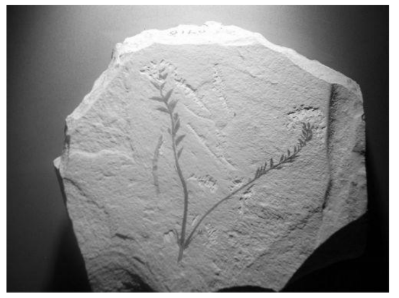
In a science fiction movie, scientists find fossilised pollen grains of Archaefructus and use them to fertilise a modern genus of Archaefructus. Nitya thinks that these pollen grains can be found under polar ice sheets, where the temperature is around -40°C. Is she correct and why?
A. Yes, because -40°C is enough to keep pollen grains viable.
B. No, because the pollen grains will get wet and won’t function.
C. Yes, because pollen grains are viable at any temperature for several years.
D. No, because pollen grains need to be stored at much lower temperatures to be viable.
Ans: D. No, because pollen grains need to be stored at much lower temperatures to be viable.
5. Which of the following is TRUE for a flower giving rise to a false fruit in apples?
A. The ovary is infertile.
B. The ovary does not undergo fertilisation.
C. The thalamus undergoes fertilisation.
D. The thalamus forms a part of the fruit.
Ans: D. The thalamus forms a part of the fruit.
6. Two statements are given – one labelled Assertion (A) and the other labelled Reason (R).
Assertion (A): Endosperm in a flowering plant is formed before the formation of the embryo.
Reason (R): The endosperm provides food to the developing embryo.
Which of the following is correct?
A. Both A and R are true, but R is not the correct explanation of the assertion
B. Both A and R are true, and R is the correct explanation of the assertion.
C. A is true, but R is false.
D. A is false, but R is true
Ans: B. Both A and R are true, and R is the correct explanation of the assertion.
7. Consider three plants with the following modes of pollination:
Plant P: autogamy
Plant Q: xenogamy
Plant R: geitonogamy
Which of the above case/s is/are most likely to NOT show genetic variation in the offspring?
A. only P
B. only Q
C. only P and R
D. only Q and R
Ans: C. only P and R
8. (a) Plants have two phases in their life cycle: the sporophytic phase and the gametophytic phase. The sporophytic phase is diploid and vegetative, while the gametophytic phase is haploid and reproductive. From this information, identify the male gametophyte in angiosperms.
(b) The megasporangium is the female spore-bearing structure which carries the megaspore mother cell. This gives rise to the megaspores. Name the megaspore in angiosperms.
Ans:
(a) pollen grain
(b) ovule
9. The image below shows a bee visiting an inflorescence on a banana plant.
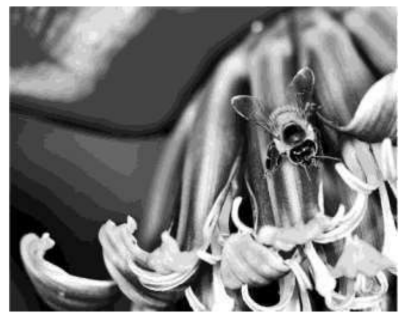
Considering the fact that a banana is a parthenocarpic fruit, what would be MOST LIKELY the reason for the bees to visit the banana flowers?
Ans: To collect nectar.
10. Pollen grains are shed at either a two-celled stage or a three-celled stage and may take some time to reach the stigma for fertilisation. The pollen grains germinate on the stigma of the flowers.
(a) Where do the pollen grains get the nutrition to remain viable and germinate on the stigma?
(b) Mention the cell divisions that a microspore mother cell goes through to reach a three-celled pollen grain stage.
Ans: (a) The vegetative cell of the two three-celled pollen grains provides nutrition.
(b)
- Microspore mother cells undergo meiotic division to form the microspores
- Microspores undergo mitotic division to form the three-celled stage
11. Set up: An area with different species of plants. A colour tracer is added to the pollen of species A.
Observation: The pollen from species A reaches the flowers of species A as well as species B. However, pollination occurs only with the flower of the species A.
(a) Name and explain the phenomenon underlying this observation.
(b) How can a farmer prevent any more pollen grains from landing on the stigma of flowers of the same species after she has artificially pollinated the flowers?
Ans:
(a)
- Pollen-pistil interaction
- The ability of a pollen grain to germinate its pollen tube on the stigma of a flower is controlled by certain chemical interactions. This chemical compatibility is termed as pollen-pistil interaction.
(b) By bagging or covering the stigma of the flower with a bag made of butter paper
2 Marks Questions
12. The exine layer of pollen grains contains sporopollenin, which is a highly resistant chemical. Sporopollenin allows pollen grains to be well-preserved as fossils.
(a) Can fossilised pollens fertilise an ovum of the same species in the present day? Justify.
(b) How do scientists preserve pollen grains for later use?
Ans:
- (a) No. Pollen grains cannot remain viable for such a long time as that taken for fossilisation.
- (b) In liquid nitrogen at very low temperature conditions
13. State ONE characteristic of a pollen grain that can help students identify:
(a) a water-pollinated pollen grain
(b) an animal-pollinated pollen grain.
Ans:
(a) The pollen grain will have a mucilaginous covering to avoid getting wet.
(b) The pollen grains will have a sticky exterior.
14. “Continued self-pollination results in inbreeding depression”.
(a) Mention ONE impact of inbreeding depression on the upcoming generations in a farmland.
(b) State ONE way in which cross-pollination helps in avoiding inbreeding depression.
Ans:
- (a) Inbreeding depression can result in loss of fertility and vigour in the existing population.
- (b) Cross-pollination causes variation of characters that increase the vigour of the population
15. Bees transfer pollen from the younger flowers at the top of a plant to the older flowers at the base. Is this an example of self-pollination or cross-pollination? Justify.
Ans: Self-pollination. Because it is the transfer of pollen grains from the anther of a flower to the
stigma of another flower on the same plant.
16. “A typical angiosperm anther is bilobed and dithecous”. Draw a labelled diagram to show what the anther would look like in a transverse section.
Ans:
- Four lobes
- Lines of dehiscence
- Pollen sacs
- Pollen grains
17. Cells of the microspore tetrads are diploid. Is this statement TRUE? Justify your answer.
Ans: False. Microspore tetrads develop from diploid sporogenous tissue by meiosis.
18. A farmer sowed tomatoes (plants with both sexes in the same flower) and bitter gourd (plants with both sexes in different flowers on the same plant) on his farmland.
(a) To ensure cross-pollination, what should the farmer do in each of the cases?
(b) If the male flowers from the tomato plant are removed and pollen is dusted, can the flower grow into a fruit? Why or why not?
Ans:
- (a)
- Emasculation will be required in tomato plants.
- Removal of female flowers in the bitter gourd plant.
- (b) Yes. The ovary needs to be present for fertilisation to happen.
19. In angiosperms, the male gametophyte has a simple structure, while the female gametophyte has a much more complex structure with multiple supporting cells in it.
How does such a structural difference help each gametophyte perform their functions better?
Ans:
- The pollen grain needs to be transferred to the stigma. Hence, a smaller size makes it easier for the movement.
- The ovule develops into the seed and supports the growing embryo. The supporting cells provide nourishment to the growing embryo.
20. Emasculation is the process of removal of anthers from a flower and is practised in artificial hybridisation techniques.
(a) Mention ONE case where emasculation is compulsory and ONE where it is not required during such hybridisation processes.
(b) Why is bagging a compulsory technique even when emasculation is not required?
Ans:
- (a)
- Compulsory for bisexual flowers
- Not required in case of unisexual flowers
- (b) to prevent unwanted cross-pollination in unisexual flowers
3 Marks Questions
21. Describe a process that can enable you to observe pollen tube germination under laboratory conditions.
Ans:
- Dust some pollen grains onto a slide
- Add a drop of sugar solution
- Allow the slide to rest for 10-15 minutes and observe under a microscope
22. Sudha cracked open a coconut and found the following content as shown in the image below:
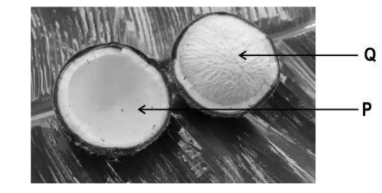
(a) Identify the parts of the seed labelled P and
(b) What is most likely to have happened to the coconut water?
(c) What is the ploidy of the coconut water that we drink from the tender
coconut? Justify.
Ans:
- (a)
- P: endosperm
- Q: embryo
- (b) The coconut water would have been consumed by the developing embryo.
- (c)
- 3n
- It is a free-nuclear endosperm
23. Some scientists have used modified techniques of the conventional methods of artificial hybridisation. One such reference is that of Reddy et al (1970), where:
- A razor blade is used to make an incision on one side of a flower bud, and some petals are removed.
- Forceps are used to emasculate the flower
- The bud is covered with a drinking straw made of plastic.
- The open end of the straw is bent.
- The straw is removed during pollination and replaced once pollination is completed.
[Ref: http://oar.icrisat.org/959/1/RA_00166.pdf]
(a) What process of a conventional method of artificial hybridisation is the straw mimicking?
(b) State 2 possible benefits of bending the straw.
Ans:
- (a) Bagging
- (b)
- Prevents contamination of the style from unwanted pollen grains
- Prevents loss of pollen grains after pollination
24. Consider two plant species as described below:
- Species P: bisexual, androecium and gynoecium mature at the same time, and the anther and the style are almost of the same height
- Species Q: unisexual, androecium matures later than the gynoecium, and anthers are longer than the styles
(a) What kind of pollination is likely to be seen in species P, and give a reason for your answer in each case.
(b) If a plant cultivator wants more viable varieties of offspring, which species should he choose to cultivate and why?
Ans:
- (a)
- Species P: Self-pollination
- Reason: androecium and gynoecium mature at the same time/ anthers and styles are of the same length. Hence, the pollen grains of the same plant can pollinate/fertilise the ovary of the same flower.
- Species Q: Cross-pollination
- Reason: unisexual/androecium and gynoecium mature at different times/anthers and styles are of different lengths. Hence, the pollen of the same plant will not be able to reach the stigma of the flowers of the same plant.
- (b) Species Q as it undergoes cross-pollination
25. Angiosperms undergo double fertilisation.
(a) What is/are the product/s of double fertilisation?
(b) If you are given a pea pod, how can you identify the product/s of double fertilisation in it?
Ans:
- (a)
- Embryo
- Endosperm
- (b)
- The embryo is represented by the entire pea seed.
- The developing embryo consumes the endosperm and cannot be identified as such.
26. Bananas and many citrus fruits are formed without fertilisation.
(a) Name the process of fruit/seed formation in both.
(b) Mention ONE similarity and ONE difference between the two processes.
Ans:
(a)
- Banana: parthenocarpy
- Citrus fruits: apomixis
(b)
- Similarity: Both are asexual modes of reproduction.
- Difference: Apomixis is a process of seed formation, while parthenocarpy creates seedless fruits.
5 Marks Questions
27. A floral formula is a concise representation of the structure of a flower. The following symbols are used to represent different facts about the flower:
K= calyx
C= corolla
A= androecium
G= gynoecium
For example, a floral formula K5C5A5G2 means that the flower has 5 sepals, 5 petals, 5 stamens and 2 carpels in the ovary.
Rishabh comes across a floral formula K6 C6A10G0 for all flowers in a plant.
(a) What does the floral formula indicate about the sexuality of the flowers?
(b) What kind of pollination (self or cross) will the plant show? Justify.
(c) What kind of fruits will this plant bear and why?
(d) If this flower is seen to have large, yellow, showy petals, what is the most likely pollinating agent for the flower?
Ans:
(a) It is an unisexual /staminate flower
(b) Cross-pollination because all flowers on the plant are unisexual.
(c) The plant will not bear fruit because it is a staminate flower.
(d) Insects/small animals/birds
28. The embryo sac represents the female gametophyte in a flowering plant.
(a) What are the constituents of the egg apparatus in the embryo sac?
(b) What is the ploidy of the cells of the egg apparatus?
(c) The formation of the embryo sac involves mitotic divisions that are “free nuclear” till the 8-celled stage. What does the term “free nuclear” mean?
(d) The filiform apparatus at the micropylar end forms an important part of the embryo sac. What is the importance of the filiform apparatus?
Ans:
- (a)
- Synergids
- Egg cell
- (b) Haploid
- (c) Nuclear divisions are not followed by cell wall formation/cytoplasmic division
- (d) The filiform apparatus guides the pollen tube into the synergids.
29. (a) The image below shows a blue-throated hummingbird visiting a flower.
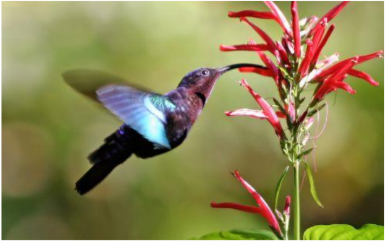
What is the benefit that the flower derives from the hummingbird? Justify.
(b) What kind of pollen grains would a flower most likely have when it is seen to be visited regularly by birds and butterflies?
(c) “Self-pollinated flowers mostly do not need pollinating agents.” Mention whether this statement is true or false with a reason for your answer.
Ans:
- (a)
- The hummingbird aids in pollination.
- Pollen grains stick to the beak of the bird when it inserts its beak into the flower.
- (b) sticky pollen grains
- (c) True. The pollen grains are not carried too far to be dependent on agents for transfer.
30. Give a reason for each of the following:
(a) The exine of pollen grains is very hard.
(b) The endosperm of flowering plants is triploid.
(c) A pollen grain landing on a stigma does not ensure fertilisation.
(d) Sexual reproduction brings in variation.
(e) Seeds of hybrid varieties need to be produced afresh every year.
Ans:
- (a) To protect the generative cells
- (b) One of the male gametes fuses with two polar nuclei, forming (n+n+n) nucleus of the endosperm
- (c) There is a pollen-pistil compatibility factor that allows fertilisation
- (d) Fusion of two gametes coming from two parents ensures the mixing of characters
- (e) Characters in the progeny separate and do not maintain hybrid characters
Additional Study Materials
- Biology Sample Paper 2026
- Biology Sample Paper 2025
- Biology Question Paper 2025
- Biology Sample Paper 2024
- Biology Question Paper 2024
- Biology Sample Paper 2023
- Biology Question Paper 2023