NIOS Class 12 Environmental Science Sample Paper
Time: 3 Hrs Marks: 80
CORE MODULES OBJECTIVE QUESTIONS TYPE –I
1. Arrange the following stages of Human evolution in their correct sequence
i. Homo habilis
ii. Homo sapiens
iii. Homo erectus
iv. Australopithecus
Correct sequence is:
a. iv, i, iii, iv
b. i, ii, iii, iv
c. iii, i, iv, ii
d. ii, iii, iv, i
Ans: a. iv, i, iii, iv
2. The type of forest found near the equator is:
a. Deciduous forests.
b. Temperate rain forests.
c. Tropical rainforests.
d. Coniferous forests.
Ans: c. Tropical rainforests.
3. Alcoholism and use of drugs problem related to :
a. Genetic influences.
b. Behavioural influences.
c. Social influences.
d. Social influences.
Ans: b. Behavioural influences.
4. Tehri Power Project is located at the junction of two rivers namely :
a. Dhauliganga and Ramganga.
b. Ganga and Banganga.
c. Bhagirathi and Bhilganga.
d. Alaknanda and Yamuna.
Ans: c. Bhagirathi and Bhilganga.
5. Nitrogen fixation is an important part of nitrogen cycle. It can be completed through:
i. Atmospheric processes.
ii. Industrial processes.
iii. Bacterial processes.
a. a. and b only
b. b and c only
c. a and c only
d. a only
Ans: a. a. and b only
6. Urban communities includes characteristics such as:
a. Social heterogeneity.
b. Social mobility.
c. Availability of facilities.
d. Pollution-free.
Select odd one characteristic?
Ans: d. Pollution-free.
7. Till recently Rural women suffered from respiratory problems, as there were using coal as their cooking fuel. The gases responsible for these problems are:
a. N2 and N2O
b. CO and CO2
c. CH4 and CO2
d. C2H2 and Cl2
Ans: c. CH4 and CO2
8. What kind of water is potable water?
a. Brackish water.
b. Fresh water.
c. Saline water.
d. Distilled water.
Ans: b. Fresh water.
9. The best way to reduce garbage would be:
a. not to wash your cars every day.
b. casual attitude towards natural resources.
c. try to recycle and reuse rather than over use of common properties and resources available.
d. make full use of the writing papers
Ans: d. make full use of the writing papers
10. During the beginning of industrialization, flint axes were already in use by the farmers. They were needed for:
a. Clearing dense forest land to grow crops.
b. Animal hunting
c. Making wheels.
d. Making tools.
Ans: a. Clearing dense forest land to grow crops.
11. A student included the following flora as members of Thar Desert. Which one is not a correct option?
a. Calotropis gigantea
b. Prosopis spicigera
c. Dalbergia sissoo
d. Acacia leucophloea
Ans: d. Acacia leucophloea
12. The maximum load or pressure of human activities that the environment can withstand or tolerate is known:
a. Load sharing capacity.
b. Carrying capacity.
c. Natural resource consumption capacity.
d. Sustainable development.
Ans: b. Carrying capacity.
13. Provision permitting the capture and transportation of wild animals for scientific management of animal population was introduced in the:
a. Forest Act.
b. Wildlife Act.
c. Biodiversity Act.
d. Environment (Protection) Act.
Ans: b. Wildlife Act
OPTIONAL MODULE -A WATER RESOURCE MANAGEMENT
14. (i) Name the person who founded Tarun Bharat Sangh:
a. Prof Vidyut Joshi
b. Shri Kailash Satyarthi
c. Shri Rajendra Singh
d. Shri Mangu Ram
Ans: c. Shri Rajendra Singh
15. (i) Which one of the following statement is incorrect?
a. Disinfection kills the harmful germs from water
b. Desalination is the removal of excess iodine from water.
c. The technique used for community water supply is called Nalgonda Techniques.
d. Microstainers are used mainly to remove algae.
Ans: a. Disinfection kills the harmful germs from water
16. Mortality by water borne diseases is a major problem in our country. According to you which one of the following suggestion is the simple cure of this problem?
i. Ensure availability of good quality water for drinking and bathing.
ii. Never drink water directly from exposed water bodies or water storage vessels.
iii. Get the authorities to supply treated potable water.
a. i only
b. ii and iii only
c. iii only
d. i ,ii, and iii
Ans: d. i ,ii, and iii
OPTIONAL MODULE- B ENERGY AND ENVIRONMENT
14. The most abundant energy source present on earth is:
a. Solar energy
b. Biomass
c. Hydel power
d. Tidal energy
Ans: a. Solar energy
15. Identify the incorrect pair of ‘different methods of wind energy generation’ ‘given in Column A and’ their use’ in Column B:
| Column A | Column B |
| a. Wind turbine | i. Electricity generation |
| b. Wind farm | ii. Sowing seeds in farm |
| c. Aero generation | iii. Charging large batteries |
| d. Windmill | iv. Pumping water |
Ans: The incorrect pair is
| b. Wind farm | ii. Sowing seeds in farm |
16. (i) Choose the correct definition.
While explaining petro crops, a teacher defined petro crop as plants which:
a. Are unfit for eating by humans or animals.
b. Yield fodder and fibre.
c. Produce hydrocarbon which can be used as fuel.
d. Yield crude petrol-like secretions.
Ans: c. Produce hydrocarbon which can be used as fuel.
CORE MODULES OBJECTIVE QUESTIONS TYPE-II
17. Provide the names of the kinds of forests found in India based on the features mentioned below:
a. Tropical evergreen trees where rainfall is surplus.
b. Abundant oak trees which show peak leaf fall during summer.
Ans:
- a. Tropical rain forest.
- b. Temperate broad-leaf forest.
18. Answer the following questions in one to two sentence ( 15-20 words) 1×6
1. What causes methaemoglobinaemia in bottle-fed babies?
Ans: High concentration of nitrates in drinking water.
2. Why have people of India started using CFL and LED bulbs and tube lights at their homes?
Ans: Consumption is low, hence lowers/cuts down the electricity bill.
3. Suggest an agricultural practice to enhance nitrogen level of soil without the application of fertilizer.
Ans: Sowing a leguminous crop as a rotational crop, after a non-leguminous crop.
4. What would happen if environment is exploited beyond its carrying capacity?
Ans: The environment may be severely damaged and lose its ability to get back to its harmless state.
5. Mention any two advantages of GM crops.
Ans: Enhanced taste and quality; reduced maturation time; increased nutrients, yields and stress tolerance; improved resistance to disease, pests, etc. (Any two)
6. Name any two human activities that affect sustainability of biosphere.
Ans: Agriculture; Industrialization; Urbanization (Any two)
19. Answer the following questions in one word only. 1×6
1. Loss of appetite, nausea, vomiting and diarrhoea, accompanied with fever, urine in dark colour is the symptoms appear in a person. Name the disease which he/she suffers from.
Ans: Infective hepatitis
2. Some plants and animals are better adapted to a given environment than the others. What will you attribute this to?
Ans: Natural selection
3. A factory in a state is discharging environmentally unfriendly effluents into nearby water bodies. Whom would you approach so that action can be taken against the polluting factory?
Ans: State Pollution Control Board
4. After Bhopal Gas tragedy, one very powerful act came in force. Name the Act and its year.
Ans: The Environmental Protection Act (1986)
5. Name the Act which can be invoked to check biopiracy?
Ans: Biodiversity Act 2000
6. The state shall endeavour to protect and improve the environment and to safeguard the forests and wildlife of the country. Which Acts gives the permission?
Ans: Article-48A
20. Fill in the Blanks by using appropriate words given below: 1×4
(Hot Spots, Poverty, Estuaries, Parasitoid wasp, UV-C, Ramsar Convention)
a. Norman Myers had developed the concept of ————–in 1988 to designate priority areas for in-situ conservation
Ans: Hot Spots
b. ———— form of ultraviolet radiation is most damaging to humans.
Ans: UV-C
c. Mealy bug pest of Cassava plant is controlled by—————-.
Ans: Parasitoid wasp
d. Wetland Convention is also known as———-
Ans: Ramsar Convention
21. Write the following statement is true or false. 1×3
a. Indian legislations are called Acts where as the international legislation are in the form of conventions, protocols and treaties. ( )
Ans: True
b. Golden rice a transgenic with enhanced Vitamin B content producing nutritionally rich rice to save many lives ( )
Ans: False
c. Use of cleaner fuels such as LNG in power plants, fertilizer plants etc. which is cheaper in addition to being environmentally friendly. ( )
Ans: True
OPTIONAL MODULE- A WATER RESOURCE MANAGEMENT
22. Give any two precautions that are to be taken while storing rain-harvested water in cisterns.
Ans: Debris and leaves should be filtered; cisterns should be kept covered to minimise algal growth/ mosquito breeding.
23. Why is it advisable to plant native plants instead of the exotics? 1
Ans: Native plants use less water than the exotics.
24. Visiting your village you found a eutrophied pond. What made you recognize eutrophication on first sight?
Ans: Algal bloom (like a floating green scum)
OPTIONAL MODULE 8B ENERGY AND ENVIRONMENT
22. Give any two examples of indirect use of solar energy. 1
Ans: Wind, biomass, waves, hydroelectric power (Any two)
23. Allocate the petrocrops Jatropha curcas and Calotrops procera to their respective families.
Ans:
- Jatropha: Euphorbiaceae
- Calotropis: Asclepiadaceae
24. We live between two great sources of energy, the no rocks beneath the earth and the sun in the sky. Which two sources of energy is being talked about?
Ans: Geothermal. Solar
CORE MODULES SUBJECTIVE PART
25. How does Ocean get an oil spill? What effect does it have on aquatic life? 2
Ans: When oil gets spilt accidentally from ships or oil tankers in the ocean, due to a lack of oxygen, marine life is killed.
26. In the process of nitrogen fixation, which organism converts atmospheric nitrogen into a nitrogen compound? Name the compound which is produced during this process, and how is it (compound) important?
Ans: Free living bacteria; symbiotic bacteria (Anabaena). Ammonia or NH3; it is used by plants in this form only.
Or
Fill in the blanks 1 to 4 left out in the diagram on structural components given below.
Shelter, water, space, food.
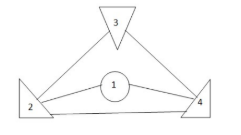
Ans:
1 = Space
2 = Water
3 = Food
4 = Shelter/cover
27. Differentiate between rural society and urban society with reference to the following factors-
(i) Social differences and stratification
(ii) Mobility
Ans:
| Factors | Rural Society | Urban Society |
| i. Social differences andstratification | Much less due to similarvocation | Differentiation is pronounced due to work related differenced in earnings. Different strata of urban society are noticeable. |
| ii. Mobility | Social mobility low.Migration of population towards cities is mainly due to poverty, much more. | Social mobility based on achievement.Migration towards villages low. |
28. Some people in India want to stay back in villages or rural areas. Which special features/characteristics of rural settlement attract them to settle there? Mention any four features/ characteristics to support your answer.
Ans:
- Close to a natural environment
- Community size is small
- Social difference is much less, and mobility is low
- Fresh air and less pollution
- Simple and peaceful living
29. State what biological diversity is? Differentiate between the three levels of biological diversity
Ans:
The total of all the varieties of living organisms on earth constitutes biological diversity.
- Genetic diversity: refers to the variety of genes contained within the species of plants, animals and microorganisms.
- Species diversity: Refers to the variety of species within a geographical area.
- Ecosystem diversity: refers to the presence of different types of ecosystems.
30. Discuss the economical importance of Biological diversity in the context of the following:
(i) As Biological Resources and
(ii) Their Social Benefits
Ans:
Biological resources: Food, fibre, medicines, fuel wood and ornamental plants.
- i. Breeding material for crop improvement
- ii. Future resources
Social benefits:
- i. Recreation
- ii. Cultural values
31. What is the role played by Mycorrhizal fungus in agriculture?
Ans:
- Absorption of nutrients is increased in plants infected with Mycorrhiza.
- Can dissolve and absorb phosphorus that plants can’t readily absorb.
Or
A farmer grows two or more crops at the same time in the field. If by chance one crop fails, the other crop cover failure.
Answer the following questions
1. What name is given to this crop practice?
Ans: Mixed cropping
2. Generally which crop is being sown along with the main crop.
Ans: Leguminous crop
32. Why is “Environment Impact Assessment”(EIA) is important? List the different aspects of EIA.
Ans:
- To prevent a detrimental impact on the environment due to developmental activities.
- Risk Assessment, Environment Management and Post Product Monitoring.
Or
Give the two main salient features of the biodiversity legislation.
Ans:
- The main intent of this legislation is to protect India’s rich biodiversity and associated knowledge against its use by foreign individuals and organisations without sharing the benefits arising out of such use, and to check biopiracy.
- The Act provides for the setting up of a National Biodiversity Authority (NBA), State Biodiversity Boards (SBBs) and Biodiversity Management Committees (BMCs) in local bodies.
- NBA and SBB are required to consult BMCs in decisions relating to the use of biological resources or related knowledge within their jurisdiction, and BMCs are to promote conservation, sustainable use and documentation of biodiversity.
33. What is green house effect and how is it related to global warming?
Ans: The greenhouse effect is the way in which heat is trapped close to Earth’s surface by greenhouse gases.
- Solar radiations strike the Earth. Some radiations are reflected by the atmosphere into space, but some passes through the atmosphere towards the Earth. About half of radiations are absorbed by the atmosphere and heats the air.
- The rest reaches the earth’s surface. The earth surface now heats up and gives off longer wavelengths or infra red radiations.
- These infrared radiations pass back up into the atmosphere. Instead of being radiated 100 per cent back into the space, much of it is absorbed by the atmosphere and is reradiated back to the earth’s surface.
- The temperature near the earth’s surface, as well as that of the atmosphere, then rises.
Or
Mention four symptoms of asthma and three possible risk factors because of which one is likely to suffer from childhood asthma.
Ans: Symptoms of asthma are:
Breathlessness, wheezing, chest tightness or pain around the chest, persistent cough that can last several weeks.
Risk factors
- Family history of allergy and allergic disorders.
- High exposure of airborne allergy causing substance among susceptible children in the first five years of life.
- Exposure to tobacco smoke.
- Frequent respiratory infections early in life.
34. As a student of Environmental Science course, you are invited to give a talk on Project Tiger in India.
(i) List the important aspects of Project Tiger that you would be highlighting during your talk.
(ii) What are the traditional practices for the protection of biodiversity in India?
Ans:
(i) Project Tiger was initiated in 1973 to conserve and rescue the tiger species from extinction; a total ban has been imposed on the hunting of tigers and the trading in tiger products at the national and international levels; elaborate management plans are made for each of the tiger reserves for tiger habitat improvement and anti-poaching measures.
(ii) A traditional strategy for the protection of biodiversity has been in practice in India in the form of sacred forest; these are small forest patches protected by tribal communities due to religious sanctity; some lakes are also declared sacred by the people, for the protection of aquatic flora and fauna.
35. What is “occupational health hazard? Write the causes, symptoms and prevention of black lung disease.
Ans: Work environment exposes hazards like injuries, respiratory diseases, cancer, and musculoskeletal disorders, reproductive disorders, mental and neurological illness, and hearing loss in human beings are known as occupational health hazards.
Black lung disease:
- Cause: Accumulation of coal dust in the lungs of coal miners.
- Symptoms: A primary symptom is shortness of breath, which gradually gets worse and may eventually cause heart failure. In some cases, a progressive disease develops massive fibrosis.
- Prevention: To avoid long-term exposure to coal dust. Coal mines may help to prevent this condition by lowering the coal dust level and providing protective clothing to coal miners.
36. Mention the various levels of ecological organization with an example each, starting from individual organisms to biome. Write a sentence on each of these levels.
Ans:
- Organism: Basic unit of study, e.g. deer, dog, and mango tree, etc.
- Population: a group of organisms consisting of several different populations that live in a defined area and interact with each other. Ex. Human population
- Community: a group of organisms consisting of several different species that live in an area and interact with each other. Ex. Different plants and animals in a forest
- Ecosystem: A community of organisms and their physical environment, interacting as an ecological unit. Ex. Pond ecosystem
- Biome: A large community unit, characterised by a major vegetation type and associated fauna, found in a specific climatic region, is a biome. Or the study of physical and biological features of a particular biome. Terrestrial area, sea, river, etc.
Or
Explain how negative feedback mechanism maintains stability as a pond ecosystem.
Ans:
- Phytoplankton increase.
- Excess food, so zooplankton increases.
- The population of phytoplankton is reduced as they are eaten up
- Zooplankton are reduced due to starvation.
- Phytoplankton increases again as less consumed now.
OPTIONAL MODULE 8A WATER RESOURCE MANAGEMENT
37. Define watershed? List any two ways by which forests help in maintaining the quality of water.
Ans: An area through which a water body gets water, either runoff or an underground path, is called a watershed. Water moves through soil and litter layers are excellent filters and relatively porous.
38. Mention any four changes that were brought in the face of Bhikampura village in Alwar district of Rajasthan by Tarun Bharat Sangh
Ans:
- Dead River began to flow.
- Round the year, agriculture became possible.
- Villagers return from cities.
- Enough water and fodder became available, and animal husbandry flourished.
- Better nutrition and improvement in public health.
- Wildlife back in forests (Any four)
Or
Give reasons why we are not able to use about 66% of the total fresh water found on earth?
Ans: It is locked in the ice caps of Antarctica and glaciers as solids that occupy high alpine locations.
39. Water bill of your house has suddenly gone up due to irresponsible uses of water in your residence. Suggest any four ways by which each family member can contribute towards conservation of water and there by leading to lowering the water bill.
Ans:
- Use only the amount you actually need.
- Do not leave the tap running while you are brushing your teeth or soaping you in your face
- Make sure that your home is leak-free.
- Use different methods for storing rainwater.
- Avoid flushing the toilet unnecessarily
Or
Your neighbour frequently wastes lots of water. Convince your neighbour to harvest rainwater by emphasising one economic benefit and one usability benefit.
Ans:
- Reduced monthly bill (economic)
- Excellent quality water/ Can be used for various purposes
OPTIONAL MODULE 8B ENERGY AND ENVIRONMENT
37. List any four technologies that are used during the construction of an ecohouse. 2
Ans:
- Rainwater harvesting with an underground cistern
- Roof-integrated solar water heater
- Window-mounted retractable solar cooker
- Multifed biogas plant, usable as a septic tank if required.
- Three different types of experimental roofs (Hollow concrete tiles, prefab brick jack arches,
- madras terrace roof)
- Design for Ventura (ventilation via inner courtyard).
38. Mention any four ways/methods by which you would like to conserve energy while using refrigerator.
Ans:
- Keep refrigerator temperature between 37°F and 40°F and freezer set at 50°F.
- We should refrigerator as full as possible.
- Close the door properly because it consumes more energy.
- Avoid keeping uncovered liquid in the fridge. Food should be cooled upto room temperature before putting it into the refrigerator.
- The door should not be opened several times.
Or
Mention two examples where passive solar energy is used.
Ans:
- Evaporation of seawater for producing salt
- Drying of clothes;
- Drying of food/plant parts;
- Heating/cooling/daylight of homes/buildings
39. As an energy conservation activist, which are the points that you would like to suggest to the builder of townships for constructing environmentally friendly green buildings?
Ans:
- i. Building designs and construction practices should promote energy conservation
- ii. Use of renewable energy sources should be encouraged.
- iii. Facilitate energy conservation as related to local transportation needs
- iv. Awareness should be raised among people for the conservation of energy sources.
- v. Promote community self-sufficiency and independence with respect to energy levels and
- encourage the use of the least environmentally damaging sources of energy.
- vi. The town should minimise its energy consumption.
Or
Fossil fuels are fast dwindling. Which four alternative natural sources of energy can be used to conserve fossil fuels?
Ans:
- Tidal
- Direct solar
- Wind
- Hydel/hydro power
Additional Study Materials
NIOS Class 12 Environmental Science Syllabus Bifurcation